

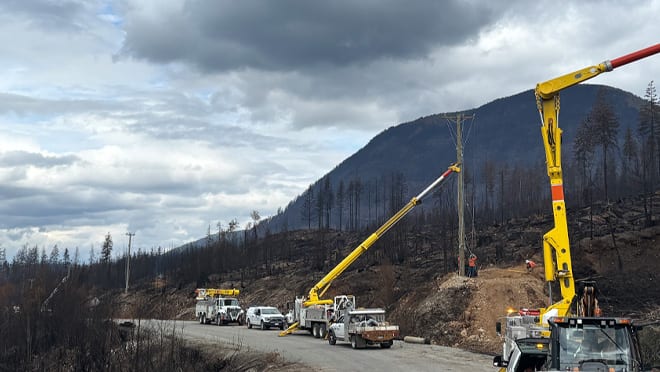
B.C. Hydro says forecast rainfall should help replenish the Comox Lake Reservoir following an exceptionally dry summer, but the changing weather could also bring an increased risk of power outages and other storm-related damage.
The reservoir is currently at an elevation of approximately 131.3 metres—about four metres below the level considered full.
Careful water storage and controlled releases have allowed B.C. Hydro to maintain downstream river flows despite historically low inflows into Comox Lake during the prolonged dry period.
When the reservoir falls below 131 metres, flows from the lake toward Comox Dam can become constrained, potentially limiting the amount of water available for downstream releases.
Moderate to heavy rainfall forecast over the coming days is expected to raise the reservoir to its typical seasonal elevation of approximately 133 metres within seven to ten days.
With conditions expected to improve, B.C. Hydro plans to increase releases from the Comox Dam beginning Friday evening. Flows below the Puntledge River powerhouse will return to the ordered minimum of 16 cubic metres per second.
Additional releases could be required to control the reservoir level as rainfall increases and the region enters the fall storm season.
However, the utility is also warning that the effects of B.C.’s hot, dry summer could make fall and winter storms more damaging.
A new B.C. Hydro report says prolonged drought, extreme heat and wildfire can weaken trees and their root systems long before strong winds and heavy rain arrive.
Trees and vegetation are already the leading cause of storm-related power outages in British Columbia. Drought-stressed trees may remain standing throughout the summer before falling during the first significant windstorm of the season.
Wildfire-damaged landscapes may also face a greater risk of flooding, erosion and landslides when substantial rainfall returns.
B.C. Hydro says the traditional separation between wildfire season and storm season is disappearing, making year-round emergency preparedness increasingly important.
The utility has tripled its annual vegetation-management spending during the past six years to approximately $150 million. It is also using expanded weather forecasting and outage-prediction technology to identify areas facing elevated risks before storms arrive.
Residents are encouraged to prepare or update a household emergency plan and maintain a 72-hour supply kit containing food, water, medication, flashlights, batteries and first-aid supplies.
Anyone encountering a fallen, damaged or low-hanging power line should remain at least 10 metres away—approximately the length of a transit bus—and call 911.
Current outage information is available through the B.C. Hydro mobile app and at BC Hydro.
 Campbell River Shoebox Project Hopes To Deliver Holiday Comfort Across The North Island
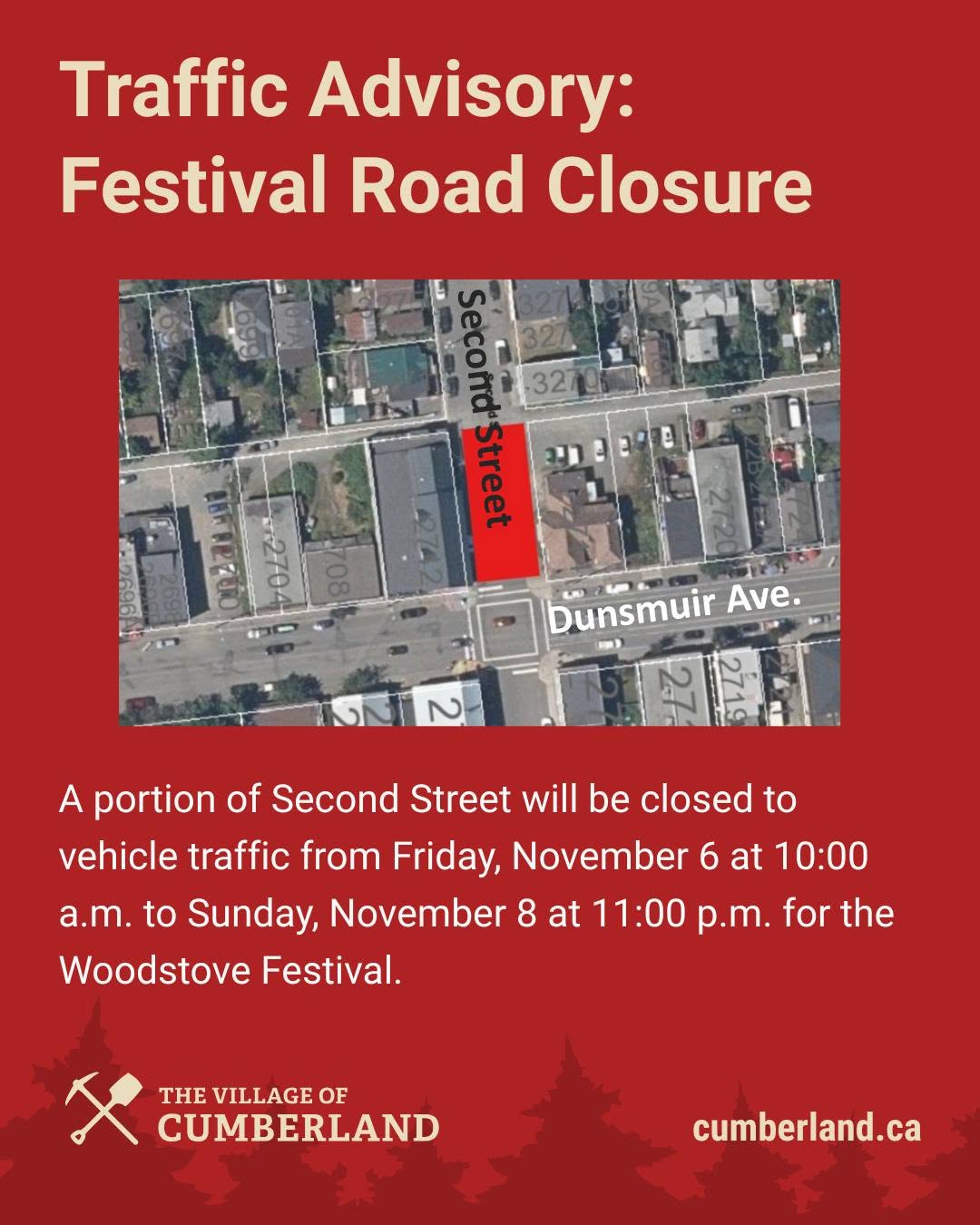 Cumberland Road Closure In Effect For Woodstove Festival
 Greenways Land Trust Celebrates 30 Years With Fundraising Evening
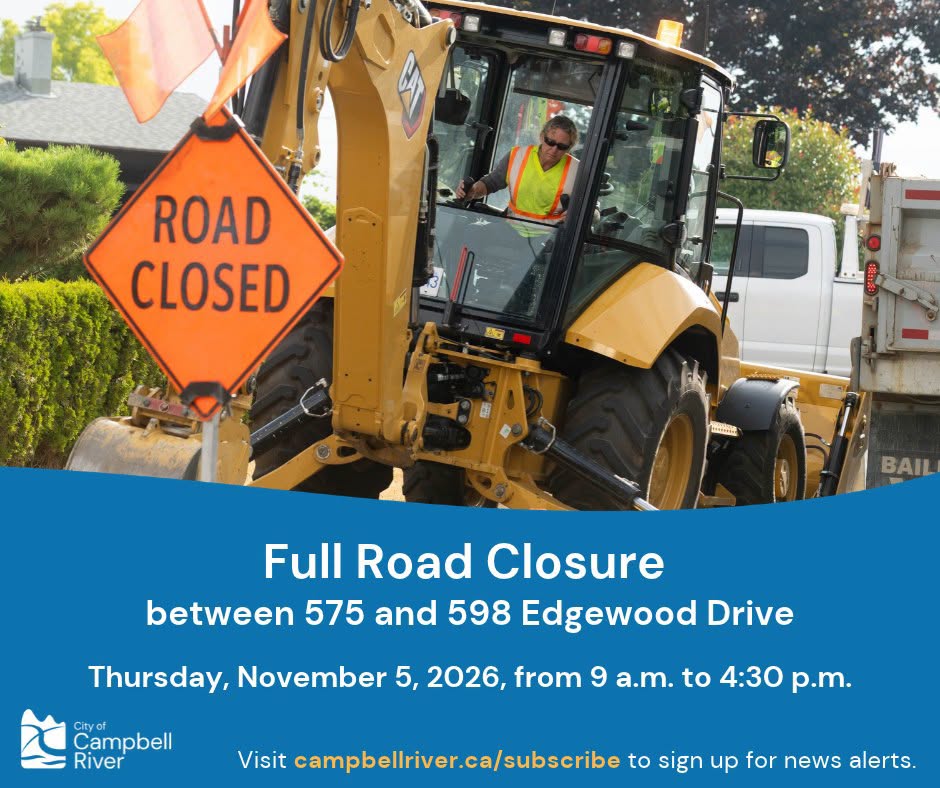 Water-Service Repair Closes Part Of Edgewood Drive Today
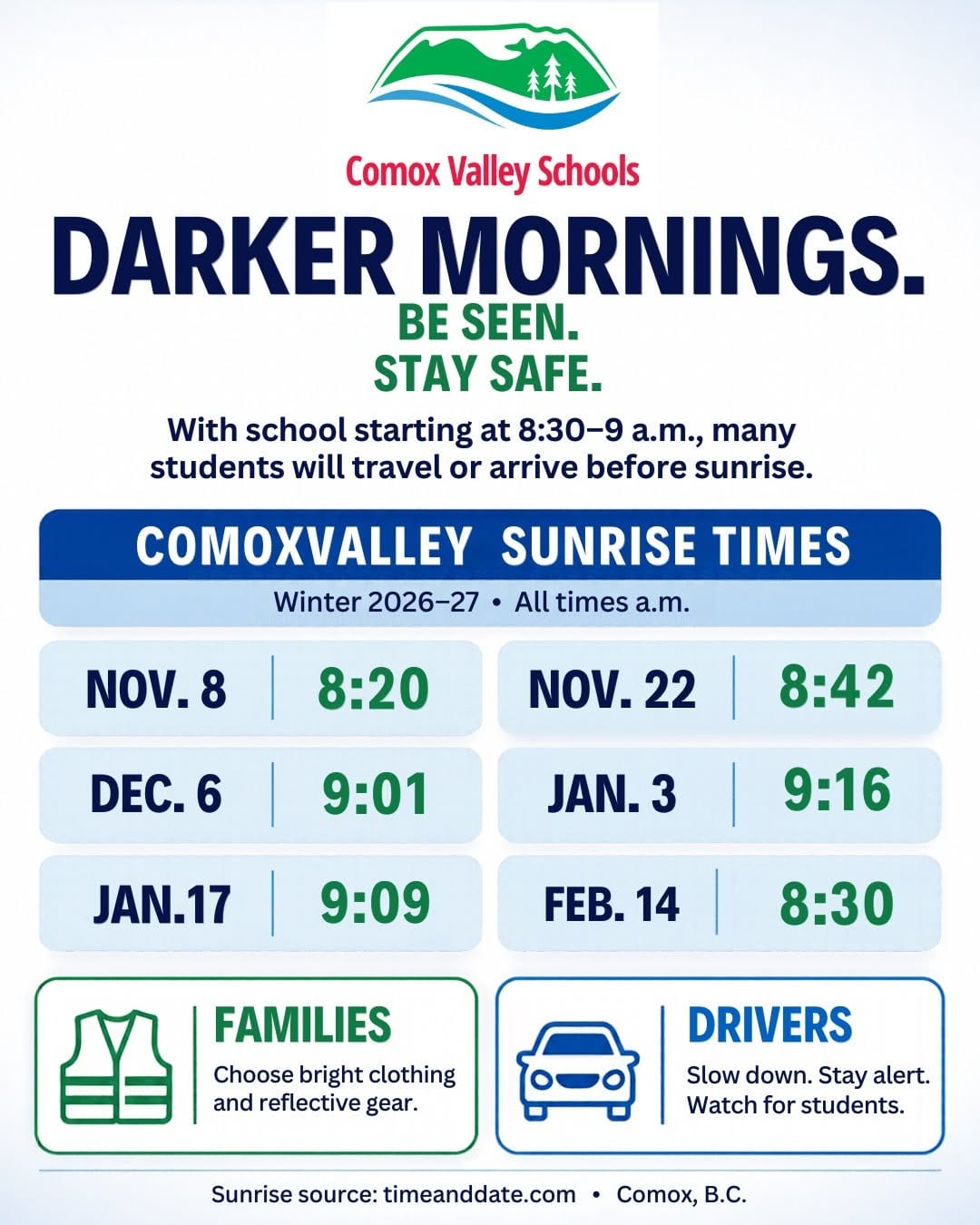 Schools Urge Extra Caution As Students Travel Before Sunrise