

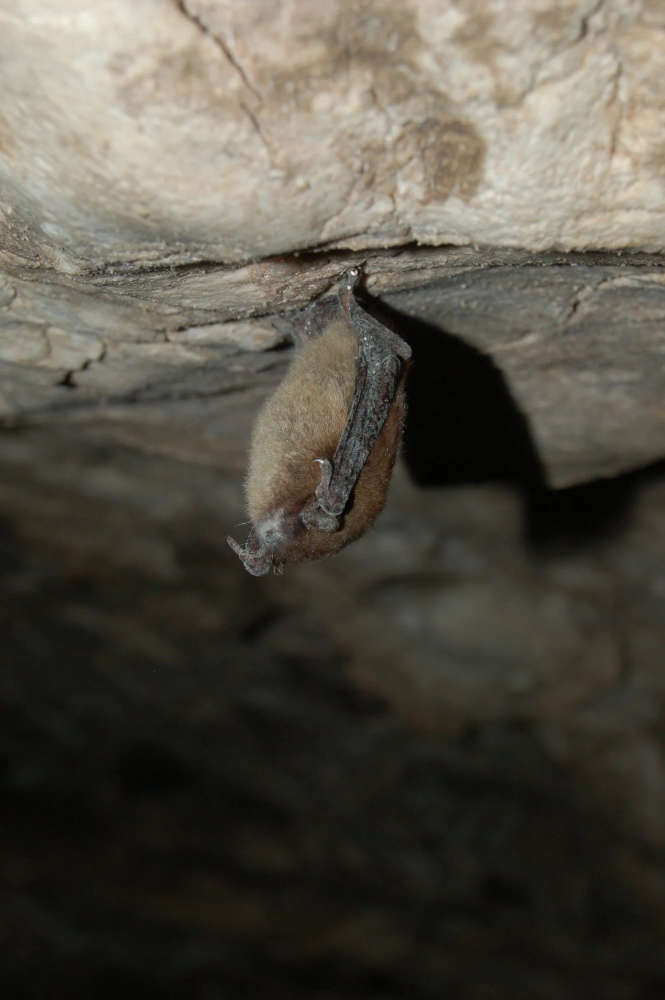
The fungus responsible for white-nose syndrome in bats has been detected again in British Columbia.
Provincial officials say the fungus was recently found in a bat guano sample collected in the Metro Vancouver area.
It’s the second time the fungus has been detected in the province, after it was first identified in guano found near Grand Forks in 2022.
So far, there have been no confirmed cases of white-nose syndrome in bats in B.C., but officials say the discovery helps guide ongoing monitoring efforts.
White-nose syndrome is a fungal disease that disrupts bats’ winter hibernation.
Infected bats wake more frequently and burn through the energy reserves they need to survive the winter, which can lead to starvation and death.
The disease has had devastating impacts on bat populations east of the Rocky Mountains and has contributed to several Canadian bat species being listed as endangered.
Bats play an important role in ecosystems by eating large numbers of insects, including pests that affect crops and forests.
The fungus spreads mainly through contact between bats, though people can also accidentally move fungal spores on clothing or equipment.
The North Island Community Bat Program urges residents to report any daytime bat activity in winter, as well as sick or dead bats, up until May 31.
Reports can be made online at bcbats.ca, by calling 1-855-9BC-BATS extension 25, or by emailing northisland@bcbats.ca,
To learn more, visit Government of British Columbia.
 Wildfire Update
 Partial Road Closure on Hilchey Road for Work on Bike Lanes
 Harrogate Road and Erickson Road Intersection Closure Extended to September 4th
 Comox Valley RCMP warns about fake social media posts
 RibFest at Village Park August 21-23