

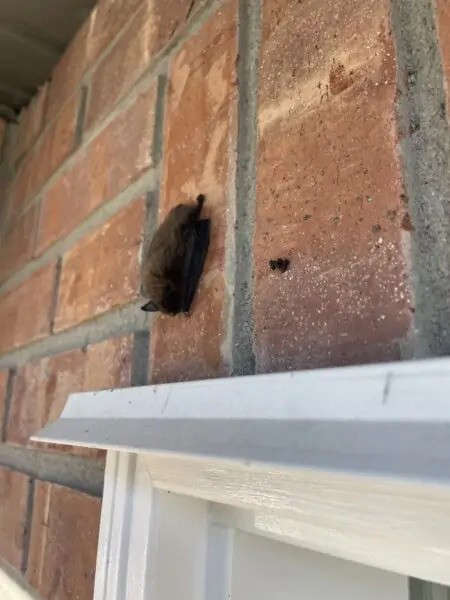
BC’s Community Bat Programs remind residents that bats are starting to leave their summer roosts and may end up in some unusual spots.
There are at least 15 species of bats in BC and their supporters say they all provide free and natural insect pest control services for the community.
But as they leave their roosts, they can sometimes be spotted in entryways, on exposed walls, on the ground, in covered deck areas, or flying into a house if the door is left open in the evening.
Heather Thomson, Comox Valley Community Bat Program coordinator, explains that bats don’t breed like mice as females only have one pup per year.
Pups are born in June, learn to fly and start hunting for bugs in July, and start to leave their maternal colonies in August and September.
Bats have to fatten up enough to survive all winter without eating. About half of the pups don’t make it through their first winter.
Bats should be left alone if they are roosting in areas safely away from pets or children.
They’ll fly at night to continue foraging for insects. Thompson says it's best to just “let the bat hang out for the day.
Less than 1% of bats in BC are known to carry rabies; however, this is why it is important to avoid any contact.
If you must move a bat, wear thick gloves and long sleeves, and use a small trowel, box or cotton cloth bag to gently capture and relocate a bat to a tree nearby.
Release the bat at head-height or higher, on a tree where pets and curious children won’t disturb it.
The BC Community Bat Program recommends that cats be kept indoors in the evening when the bats are active.
“Bat pups are learning to fly at this time of year and they are easily caught and killed by cats,” says Thomson.
To learn more, visit Cumberland Community Forest Society.
 Wildfire Update
 Partial Road Closure on Hilchey Road for Work on Bike Lanes
 Harrogate Road and Erickson Road Intersection Closure Extended to September 4th
 Comox Valley RCMP warns about fake social media posts
 RibFest at Village Park August 21-23