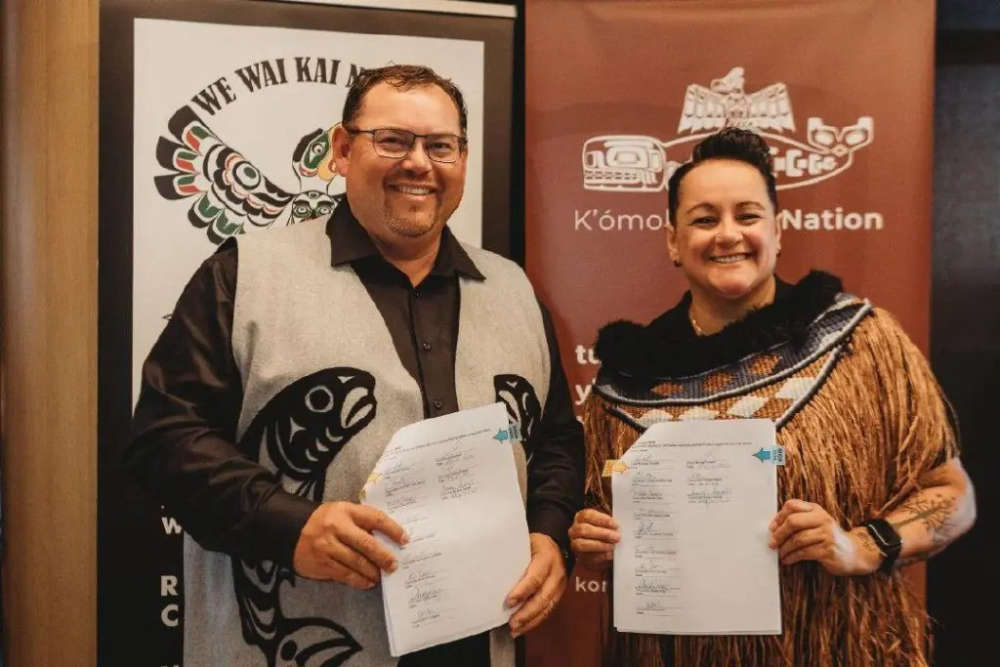
The K’ómoks First Nation and We Wai Kai Nation have signed a historic protocol agreement aimed at strengthening their relationship and collaboration.
The agreement, signed Monday in Campbell River, reflects years of dialogue, relationship-building, and work between the neighbouring Nations.
It recognizes their shared history, cultural and family connections, and establishes a commitment to supporting one another.
K’ómoks Chief Nicole Rempel says the agreement gives the Nations a way to recognize their respective interests, respect one another, and move forward together.
The protocol also creates a framework for the Nations to communicate and cooperate on matters of shared interest.
That could include stewardship, cultural initiatives, economic development, and other priorities identified by the two Nations.
We Wai Kai Chief Ronnie Chickite says the protocol was built together by the two Nations and will help them support each other and honour their longstanding relationships.
The Nations say the agreement is not the end of their discussions, but a renewed foundation for building trust and identifying opportunities to work together for their members and future generations.
The Province of B.C. was not a party to the agreement, but Indigenous Relations and Reconciliation Minister Spencer Chandra Herbert says the achievement will help create stronger relationships, communities, and a stronger future.
The two Nations plan to celebrate the milestone with their members at an event this fall.
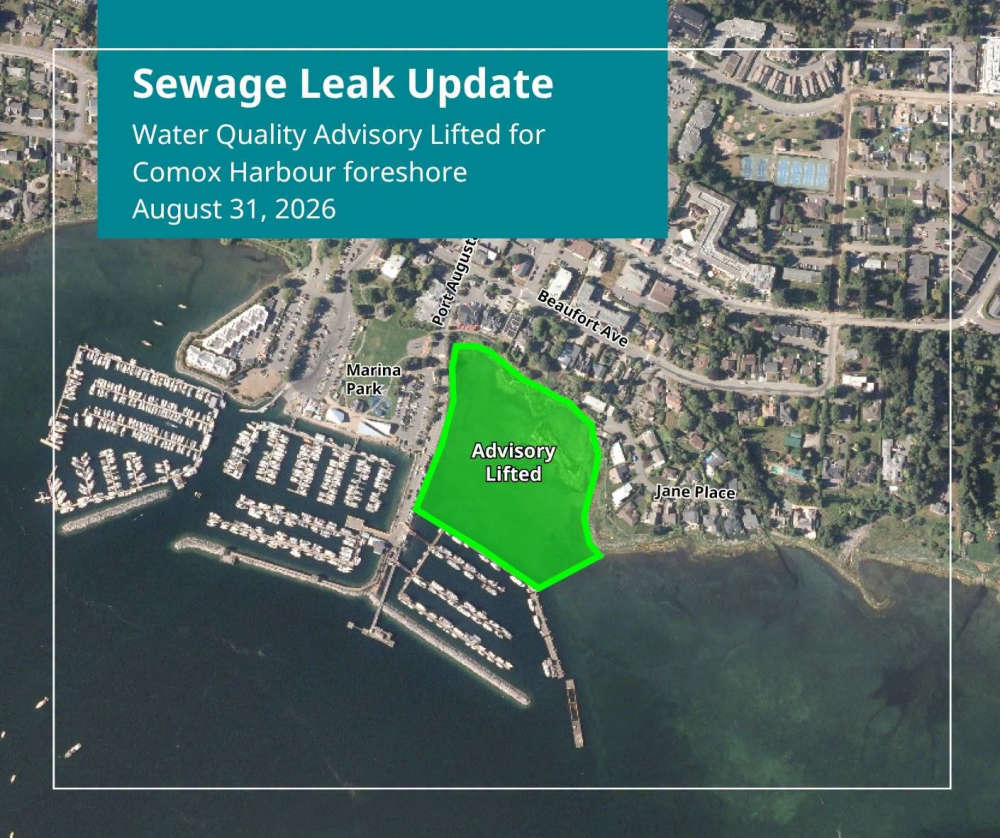 Water Quality Advisory Lifted For Comox Harbour Foreshore
 ICBC Warns School Commute Is The Riskiest Time Of Day For Kids
 New Before- And After-School Child-Care Spaces Coming To B.C. Schools
 Man Charged In Connection With Break And Enter Investigation
 Overdose Awareness Day Marks 25 Years