
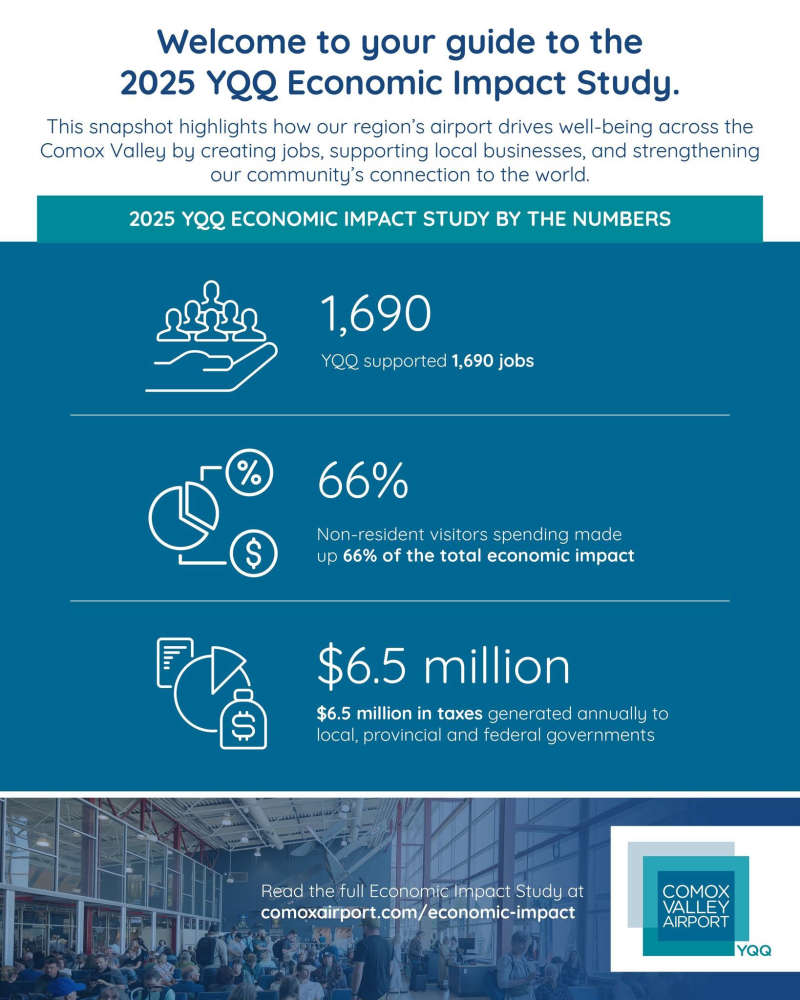
A new economic impact study shows the Comox Valley Airport continues to be a major economic driver for the region and Vancouver Island.
The study found civilian operations at the airport generate $312 million in annual economic output and support nearly 1,700 jobs throughout the region.
The Comox Valley Airport welcomed a record 449,849 passengers in 2025, making it the second-busiest airport on Vancouver Island.
Airport officials say continued growth in passenger traffic and expanded connections to destinations across Canada and Mexico are helping strengthen the regional economy.
According to the study, airport activity supports employment across a wide range of sectors, including tourism, hospitality, transportation, aviation, construction, retail, and professional services.
Comox Valley Airport CEO Mike Atkins says the airport is a key piece of regional infrastructure that connects local residents and businesses with opportunities across Canada and internationally.
He says maintaining strong and reliable air service will remain important as the region continues to grow.
The report estimates airport-related activity contributes nearly $169 million to regional GDP and generates more than $90 million in annual wages and salaries.
It also found visitors arriving through the airport spend more than $206 million annually in the region.
The Economic Impact Study examined the direct, indirect, and induced economic benefits generated by airport operations, airline services, on-site businesses, and visitor spending.
The full report and key findings can be found at Comox Valley Airport.
 Wildfire Update
 Partial Road Closure on Hilchey Road for Work on Bike Lanes
 Harrogate Road and Erickson Road Intersection Closure Extended to September 4th
 Comox Valley RCMP warns about fake social media posts
 RibFest at Village Park August 21-23