
B.C.’s winter tire requirements take effect Thursday, October 1, and drivers are being reminded that meeting the legal minimum does not always mean having the best tires for winter driving conditions.
Passenger vehicles and light trucks travelling on designated provincial routes must be equipped with tires marked with either the letters M and S or the three-peaked mountain and snowflake symbol.
Both options satisfy B.C.’s legal requirements, but Road Safety at Work recommends tires bearing the mountain and snowflake symbol for colder conditions.
Those tires are specifically designed to remain flexible when temperatures fall below seven degrees and provide improved grip, braking and cornering on cold, wet, snowy and icy roads.
Road Safety at Work says the right winter tires can reduce stopping distances by up to 33 per cent in poor conditions compared with other tires.
Drivers are also encouraged to inspect their tires before installing them.
B.C. law requires winter tires to have at least 3.5 millimetres of tread depth, although Road Safety at Work recommends replacing them before the tread falls below 6.5 millimetres.
Tire pressure and overall condition should also be checked regularly, particularly as temperatures fall.
Drivers should use four matching winter tires instead of mixing winter and non-winter tires, which can create uneven traction and affect how a vehicle handles.
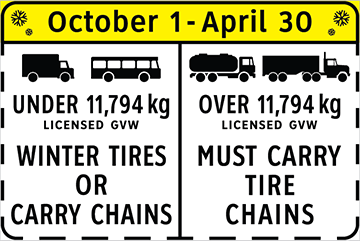
Winter tire requirements remain in effect on most designated B.C. routes through March 31, while some highways require them until April 30.
Drivers can check the signs posted along their route or visit B.C. Winter Tire Requirements for specific requirements.
 Municipal Facilities Closing Wednesday For National Day For Truth And Reconciliation
 Series Of Earthquakes Recorded Off Northern Vancouver Island
 Rotary Club Inviting Campbell River Residents To Join Community Cleanup
 Courtenay Recreation Launching Kids Night Out At Lewis Centre
 New NIC Facility Adds 75 Childcare Spaces And Hands-On Learning Opportunities